For any Americans knowledgeable of our nation’s history, the first quarter of the 21st century begs again asking the same questions raised in 1917 and 1941: Why should black Americans (as well as other non-Anglos and women) bother serving in our nation’s armed forces? Why should we defend the United States? Continue reading Why Should We Fight?
Tag Archives: Second World War
Saliendo el submarino
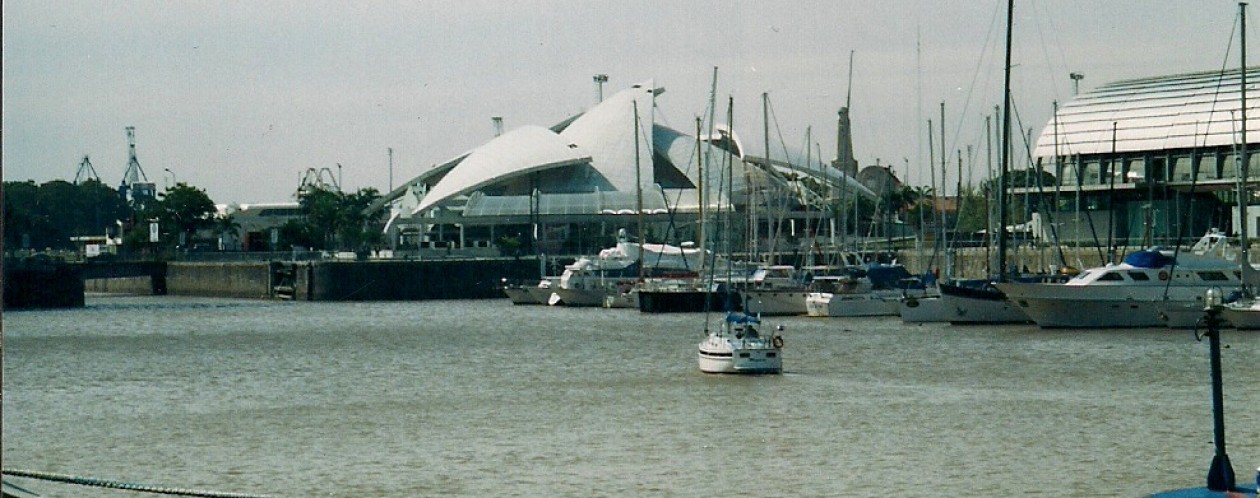
Upon reaching the driver’s scheduled break stop where passengers might stretch their legs as well as grab compressed bites to eat, that was while letting off those who’d reached their destination but before boarding any joining the journey, strange thoughts of oxidation and reduction struck Matt Pfarrer. He hadn’t needed to consider the processes since high school. He wondered why they arose on the way to Near the End of Argentina.
The motorcoach to Selknam had steadily emptied southward bound. Watching the transport’s rows open up after every arrival, he noticed replacement passengers never equaled the departures. Standing in the midst of one of those towns anywhere in the world that solely seem to exist, no, to serve as way stations for long-haul busses, modern-day stagecoaches really, Pfarrer asked himself did those boarding them ever balance or, better, exceed the departures.
He asked himself had there ever been a full bus whose terminus was Selknam. Continue reading Saliendo el submarino
El submarino está detrás de nosotros
Each sailor’s recollection started sometime in early April 1945. And he remembered exactly where he was, doing what, if any, task he performed on that fateful May 8th when the news that became known as Zero Hour arrived.
To a man, none thought he’d survive the war. The submariners knew Germany had lost World War II on D-Day. While there were fanatics, hardcore Nazis among them, most sailors remained clearheaded. They must. Putting ideology ahead of seamanship increased the likelihood of disaster.
God never entered their deliberations. There would be no absolution asked from Him. Everyone knew what he’d done for Germany. Better to express that sentiment as “for Germany” than the leader. Duty to country made their conduct palatable.
In their minds, at least. Continue reading El submarino está detrás de nosotros
Stray Cavalcade
Other than oasis stops on some caravan route, maybe, where else does so much diverse as well as damaged humanity cross except Las Vegas?
There are bigger, better, brighter, more dynamic cities upon our globe. Yet in them the cast of characters, residents and visitors, rarely change as often nor as rapidly or as abruptly as in the Big Mayberry. Continue reading Stray Cavalcade
Elsewhere May Day Is Labor Day
This Covid period among our older populace proves that after a time minds become less pliant. In them views narrow then solidify.
When I hear people, say, at least 14 years my senior, opine, they often remind me of an Allen Ginsberg quote. The poet said: “Our heads are round so thought can change direction.”
Life has squared their noggins.
There must come a period in life when our ability to juggle contrary positions against – or even adapt to – what our minds hold as irrevocable erodes. At one point each of us must’ve been mentally nimble. But as many of us age, our ability to modify or rearrange perception and understanding loses fluidity.
It’s not that those hewing tenaciously to fixed positions are simply stubborn. More like their mental processes have congealed. They just can’t budge.
No need to provoke such people. They’ll erupt without cause. The mantra they spew? “Nobody wants to work anymore.”
Popularly known as “the Silent Generation,” they huddle wedged between former NBC news anchor Tom Brokaw’s “Greatest Generation” and “Baby Boomers.” Arriving just before the Depression then shoved onto the periphery of American memory with the first birth of 1946, too few members of this cohort left an impression on our national scene. Also, the calamities that occurred between the years 1929-1945 made prospective parents wary about bringing or being able to afford having children. Their aggregate was lower than the two generations sandwiching them.
Though the Depression and World War II were nowhere near as formative to them as it was upon the participants and combatants, both events nevertheless left imprints. Here in the economically poleaxed America of the1930s and wartime’s Fortress of Democracy, daily life must’ve been maintained at some levels of precariousness.
Each era embedded its own worries upon the still forming.
Unless one’s background affluent during the Depression, want was a constant threat. A job which sustained home and hearth week after week was no certainty. And unlike today, the safety net, if one existed, consisted of savings, family, and perhaps friends. Compared to now, government programs that helped citizens tide over rough patches were meager as well as sparse.
Doubtlessly parents one pay envelope away from being up against it discussed finances in the most sotto tones. Nonetheless careful as they must have been, that sort of constant stress must’ve also reached then affected young minds.
And while the war that broke out among the Europeans in September 1939 was a topic that could be bandied at intellectual remove, Pearl Harbor two years later became a realer than real matter of survival. The Depression’s threat of possible imminent destitution might be diverted through a head down, no boat rocking posture coupled with an “it could be worse” attitude which made them grateful to possess what they had.
The December 7th, 1941, attack became a life and death matter.
Two oceans aside, wolves threatened Americans’ doors. The vast watery expanses which had kept America remote from most global conflicts were by 1941 capable of being crossed by all sorts of weapons. What had been viewed while watching movie theaters’ newsreels – cities obliterated from the air, columns of grim jackbooted troops intent on carnage – now offered foretastes of what America might’ve shared with Europe or Asia.
Easy to imagine that after Pearl Harbor no American regarded fates similar to Rotterdam or Shanghai visiting these shores as “improbable.” At least initially, conversation based on war topics were undoubtedly debated between disbelief and hysteria.
Although dementia and death have substantially reduced those then present as WWII adults, that there was possibly an undercurrent of defeatism during the global conflict’s first disastrous months is difficult to deny. It’s just the sort of thing children can absorb though can’t properly articulate sufficiently in order to have parents explain. Or dispel.
Maybe it becomes a thing that weighs adolescents who enter their teens before becoming adults; that inexplicable thing they unconsciously drag with them through life.
A benefit from Covid is it’s loosened the shackles of American workers. That’s given them leverage against bosses. Terrific!
On one hand, the worker shortage, created from retirements, deaths, and searches for better, stems directly from the disease.
The first a realization by long-time employees they’d gotten to points of simply living to work rather than working to live. Why drop dead at one’s place of employment or linger a few post-retirement years in pain and regret? If the necessary years had accrued – even if the total short – why not abandon that toil and enjoy what remained of life while it still possible?
The second, a factor way too few Americans grasp or want to, is a good number of working people succumbed to Covid. To them, their families, friends, it wasn’t a hoax. Covid wasn’t just jumped-up flu.
Despite the best efforts of right-wing barking heads and jackleg screamers to slander every patient overwhelming ICUs and hospital staffs, sufferers filling wards and providing care in them weren’t crisis actors. For awhile rumors circulated that at my own job Covid claimed one co-worker a week. Of course confidentiality rules and HR doing its utmost to protect the company blunted ascertaining whether this fact or not.
Third, the first two Covid conditions created mobility. Countless current workers are exploiting this last opening. A circumstance anyone constitutionally timid finds adverse.
A worker shortage meant dead-end, low-wage positions, and peonage treatment could be dumped for perhaps more satisfying, higher paying labor where supervisors aware the worm has turned keep their tyrant conduct in check.
That’s what “the Silent Generation” means when it erroneously states “Nobody wants to work anymore.” They’re angered that it appears nobody wants to work as they once did.
Fearful of losing jobs they were grateful to have even if it meant being humiliated throughout a career. For far too many laboring Americans that was the take-it-or-leave-it pact until Covid.
Current attitudes spreading regarding how one’s daily bread is earned reflects badly on “the Silent Generation.” They put up with shit because in return for a comfortable living standard made possible through a decent salary, benefits, and pensions, the boss could release his inner Attila the Hun on them at will. Rotten management will never hide its contempt for the cogs. Before Covid, underlings could be replaced as easily as getting a fresh tissue after soiling the previous sheet.
Then, even getting raises could’ve grown into ordeals. Despite workplace performances justifying the bump how often had the process transformed productive employees into nearly on their knees supplicants?
We may suppose “the Silent Generation” invented some nobility about enduring these trials. We may also suppose them seeing a new generation come along and blithely chucking the old nature for new measures somehow tarnishes whatever glory had shined jobs offering two-weeks-a year vacation.
Keeping True
On Father’s Day 2019, I performed an act my own late father might’ve considered sacrilegious. I attended a Dodgers game in Chavez Ravine.
To mitigate my baseball transgression I cheered for the visitors not the home nine.
Father was a Brooklyn Dodgers man through and through. The Los Angeles Dodgers could never have engaged his rooting interest. Continue reading Keeping True
Decoration Day
We Americans need to remove Memorial Day from our Monday holiday schedule. Instead, like Independence Day, observe this occasion on the date whence it falls. Unless it occurs on a Saturday or Sunday. Only then we should accede and extend the holiday onto Monday.
We should resume Memorial Day’s normal cycle in order to give more than lip service to patriotism and sacrifice. Americans have been giving both shorter shrift since the Reagan Administration. Currently, President Scalawag has all but erased their meaning.
The America in which we presently reside has become at its now feebly beating heart one the Founders would not recognize. Not from the technological or social advances none of them could’ve conceived. The tricorns, breeches and buckles set would see that little of the premise which created our once great nation still exists.
Rather, Americans have been gradually becoming disinclined in practicing the attributes that incited the Colonials to become Americans. Continue reading Decoration Day
… But Necessary Nonetheless
Screw John Hersey.
He actually covered (as a war correspondent, Hersey wasn’t a combatant) both theaters during World War II, yet his much lauded New Yorker article describing the aftermath of Little Boy on Hiroshima is steadily transforming the conflict’s concluding factor into a war crime against the victors.
When did commemorations for Hiroshima and Nagasaki become more noteworthy than Pearl Harbor remembrances? And why is this?
How have foreign revanchists and native revisionists alter just punishment into crimes perpetrated by the victims? Continue reading … But Necessary Nonetheless
The Idol
Forsaking the East required me to pare possessions. Fortunately or unfortunately, I lack a lot of sentimental feeling so few precious heirlooms weighted my way West. Instead, I brought along plenty of memories. All of which bear greater substance than most of the dustcatchers dispersed or abandoned in Quarropas.
One item borne along means absolutely nothing to me. It had been father’s. Looking at it now foments all sorts of questions because having observed him the thing is inconsistent with who he was. Or at least the man he presented. Continue reading The Idol
Welcomed Indecency
Not all worthy films are recognized as such during their premiere issuances. The numbers are legion about movies taking decades before earning proper and due appreciation. This seemed particularly so for movies appearing just before the eruption of World War II.
Given the lingering trauma of the Great War and the Depression’s stubbornness it’s easy to imagine moviegoers everywhere were somewhat resistant to diversions which asked engagement rather than merely distracted.
Why bother thinking when charm was offered?
While Gone with the Wind, Rebecca, and How Green Was My Valley remain lush, intriguing, and heartwarming efforts, respectively, several of the also-rans to these prize winners appear even worthier of the laurels than upon those honored by that era’s sentiments.
One of the least considered of this imminent war period happens to be a favorite movie of mine. So much so it’s one of the few that I routinely watch annually. Not so much it’s become a ritual with a prescribed moment and place (nor incense, oils, and animal sacrifices), but often around this time of year it will occupy a spot on my movie rental queue. Continue reading Welcomed Indecency